Florida Car Seat Rules for UK Visitors: Your simple Guide
🤔 Why You Must Check Florida Car Seat Rules For UK Visitors
Planning a Florida trip? You must know the car seat rules. For example, many UK visitors ask about US laws. Therefore, always put your child in a safe seat in your rental car. The driver must follow Florida law. Ultimately, this rule applies to anyone driving in Florida.
🚨 Compliance: UK Seats are Not Legal Here
The US and the UK use different safety rules. This is the main reason why Florida car seat rules for UK visitors are so important.
- First, UK seats carry an ECE R44 or R129 (i-Size) mark.
- However, US law requires the FMVSS 213 label.
US police look for this specific US label. As a result, most UK or EU seats do not meet the US standard. You face fines if you use the wrong seat. Therefore, experts highly recommend you rent or buy a seat when you arrive.
| Standard | Region | Certification Label | Legal for Use in Florida? |
| FMVSS 213 | USA | Must be present | YES |
| ECE R44/R129 | UK/EU | E-Marked sticker | NO |
🛑 Florida Law: Safety Rules by Age
Florida law sets rules based only on a child’s age. Specifically, the law demands crash-tested, US-approved seats for young children. You must always use the seat correctly.
👶 Ages 0 to 3: Rear-Facing Seats
- Kids up to age three must use a dedicated child safety seat.
- For example, this means a separate car seat or a built-in vehicle seat.
- Safety Tip: Experts strongly suggest keeping your child rear-facing as long as you can. Continue this practice until they hit the seat’s weight or height limit. Typically, this is often until age two or older. Rear-facing seats offer better protection for the head and neck.
Safety Best Practice: While Florida law permits forward-facing after age one, safety experts recommend keeping your child rear-facing for as long as possible—until they reach the maximum height or weight limit allowed by the car seat manufacturer, which is often until age two or older. Rear-facing offers superior protection for the child’s head, neck, and spine.
🧒 Ages 4 and 5: Booster Seats Start
- Kids who are four or five years old get more choices.
- They must use a child safety seat or a booster seat.
- Remember, the booster seat must also have the US safety approval. In addition, many children need a booster seat past age five.
🧑 Ages 6 to 17: Seat Belt Use
- After age five, the specific car seat rules end.
- However, mandatory seat belt rules then take effect.
- All passengers under 18 must wear a seat belt.
- Safety Tip: Keep your child in a booster seat until they reach 4 feet 9 inches (145 cm) tall. This ensures the adult belt fits right. Finally, keep all kids under 13 in the back seat.
🛒 How to Get a Compliant Seat
Rent a Seat
- Rental companies, such as Avis, offer seats for hire. Book them early! Infant seats often sell out.
- Note: Rental seats may be older or less clean. For better service, try a local baby gear rental service. Often, they deliver right to your hotel.
- Do not risk fines. Instead, book your Florida car rental with a company that guarantees US-approved child restraints.

Click here to secure your compliant vehicle and car seats: Book Your Florida Car Hire & FMVSS 213 Seats at SmarterCarHireFlorida.com
Buy a Seat
- For longer stays, buying a budget seat is often cheaper than renting.
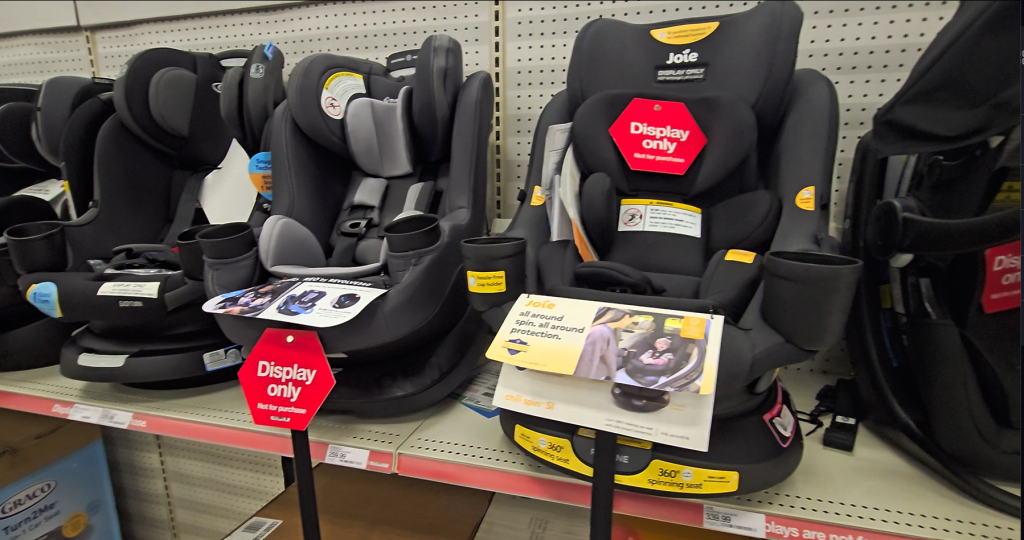
- Look for US-approved seats at these stores when you arrive:
- Walmart
- Target
- Major Grocery Stores (sometimes stock inexpensive backless boosters)
- Specialty Baby Stores (e.g., MacroBaby in Orlando)
- You can often find a safe booster for under $50 USD. Always check the box to confirm it meets FMVSS 213 standards.
🚨 What Happens If You Break the Law?
- Florida Highway Patrol officers strictly enforce these Florida car seat rules.
- If you break the law, the driver gets a fine.
- You also receive three penalty points on your US license record.
- Therefore, make sure your child is safe before every drive!
📘 Official Sources (The Law)
We used these official sources to write this guide:
- Florida Statute 316.613: Establishes mandatory child restraint requirements by age, specifying separate carriers/integrated seats (0-3) and including booster seats (4-5), and outlines the associated penalty.
- Federal Motor Vehicle Safety Standard (FMVSS) 213: This standard dictates the crash testing and certification requirements for all child restraints legally used in the United States.
- Florida Statute 316.614: Governs general seat belt usage, mandating restraints for all passengers under the age of 18.
- Florida Department of Highway Safety and Motor Vehicles (FLHSMV) Safety Centre: The official state source for current child restraint and occupant protection laws.